
Pooja S. Banerjee
Medical communications is undergoing a quiet revolution. With healthcare professionals (HCPs) facing busier schedules, stricter compliance environments, and an overload of information, the industry is shifting towards formats that are faster, more visual, more value-driven, and far more aligned with how clinicians learn and work today. Emerging trends span across publications, education, pharma marketing, omnichannel engagements, real-world evidence (RWE) integration, and data-driven personalization.
1. Scientific publications & medical education trends
The message is clear, if you want ot reach HCPs, static, text-heavy formats are no longer enough.
Dynamic content is replacing dense pages: scientific journals and medical societies are rapidly embracing visual abstracts, infographics, podcasts, and short explainer videos. These formats help busy clinicians grasp study highlights in seconds rather than scrolling through multi-page PDFs.
Leading journals like NEJM and JAMA routinely publish visual abstracts that summarize trial designs, statistics, and clinical implications in one compelling graphic, driving reach, recall, and shareability.
Microlearning and modular education are reshaping how clinicians learn: short 5–10-minute learning units, delivered through mobile apps, email series, case vignettes, and short videos, help HCPs learn on the go. Research shows modular learning boosts retention, confidence, and real-world application.
Gamification (quizzes, badges, competition) is increasingly used to sustain engagement and reinforce learning.
Social media and “infotainment” in science: Clinicians now consume a significant portion of medical knowledge on LinkedIn, X (Twitter), and YouTube, engaging with “tweetorials,” short case summaries, and quick expert analyses. This has created a new category of influencers, Digital Opinion Leaders (DOLs), who break down emerging science for large online audiences.
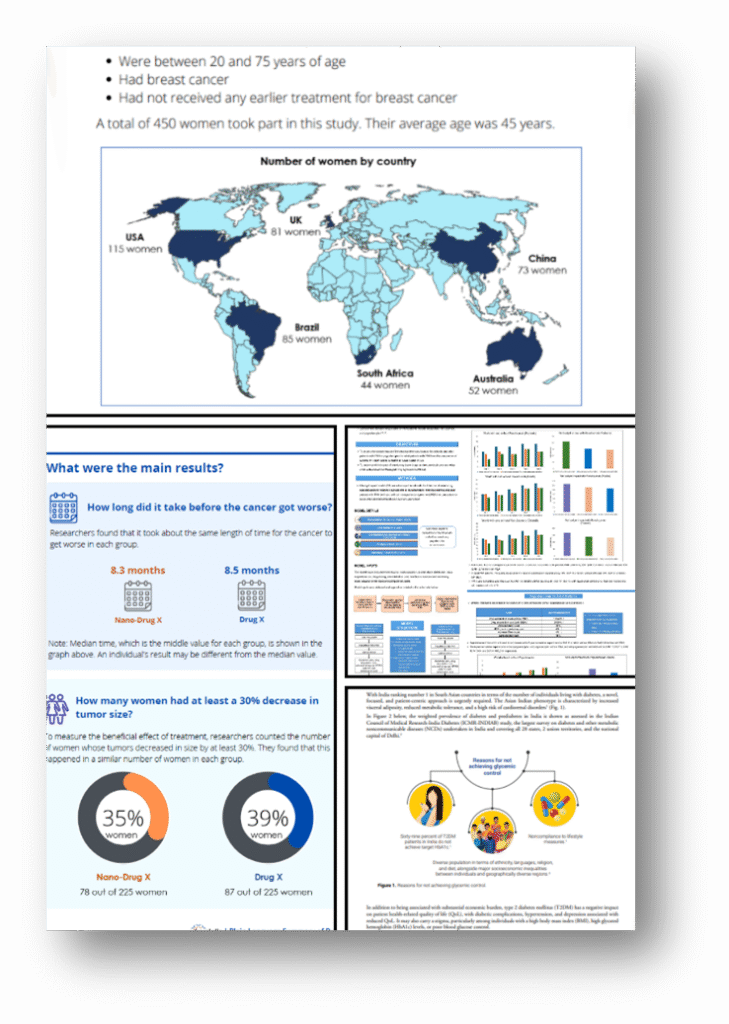
But with digital reach comes risk: misinformation spreads quickly, making scientific accuracy and credibility more important than ever. Grabbing a reader’s attention within the first few seconds requires a specific skillset, combining scientific accuracy with creative, visually appealing, and bite-sized formats that resonate with diverse audiences.
2. Pharma marketing communications: Personalized, Omnichannel, and Data-driven
Omnichannel engagement is the new standard: HCPs expect seamless interaction across webinars, emails, social platforms, sales-rep calls, and digital tools. Omnichannel strategies ensure that each touchpoint is connected, personalized, and consistent, creating one continuous conversation rather than fragmented communications.
Example: An HCP attends a webinar → receives a personalised follow-up email → explores an interactive app → views tailored educational content based on past behaviour.
Personalisation at scale remains an unmet need: Surprisingly, less than 20% of HCPs feel they receive truly personalised experiences from pharma. Most outreach still feels generic, despite evidence that customization significantly boosts engagement.
Modular content systems—pre-approved, reusable scientific blocks—are enabling faster, compliant tailoring of messages across channels.
Digital content formats are exploding in variety: From interactive PDFs and clickable e-books to hybrid events, gamified experiences, and AI-driven recommendations, the digital toolbox for engaging HCPs has expanded dramatically, accelerated by the pandemic and changing digital expectations.
3. Real-world evidence and health economics outcomes research are now central to value demonstration
HCPs want data that reflects “patients like mine,” local, practical, and applicable. RWE provides this, complementing controlled trial results with real-world impact.
RWE is now being integrated across:
- Infographics and video explainers
- Newsletters, detail aids, and digital tools
- Payer dossiers and formulary presentations
- Congress abstracts, posters, and manuscripts
- Cross-functional integrated evidence plans
Medical writers play a crucial role in converting complex, raw RWE into clear, compelling narratives without compromising scientific integrity.